Mithhallek מִתְהַלֵּךְ
The sound in the garden
After the eating, the man and woman hear it: “the voice of the LORD God walking in the garden in the cool of the day.” God, walking — at home, in the evening breeze. The Hebrew uses a special back-and-forth form of the walking verb. Follow that exact form through the Bible and watch the company it keeps.
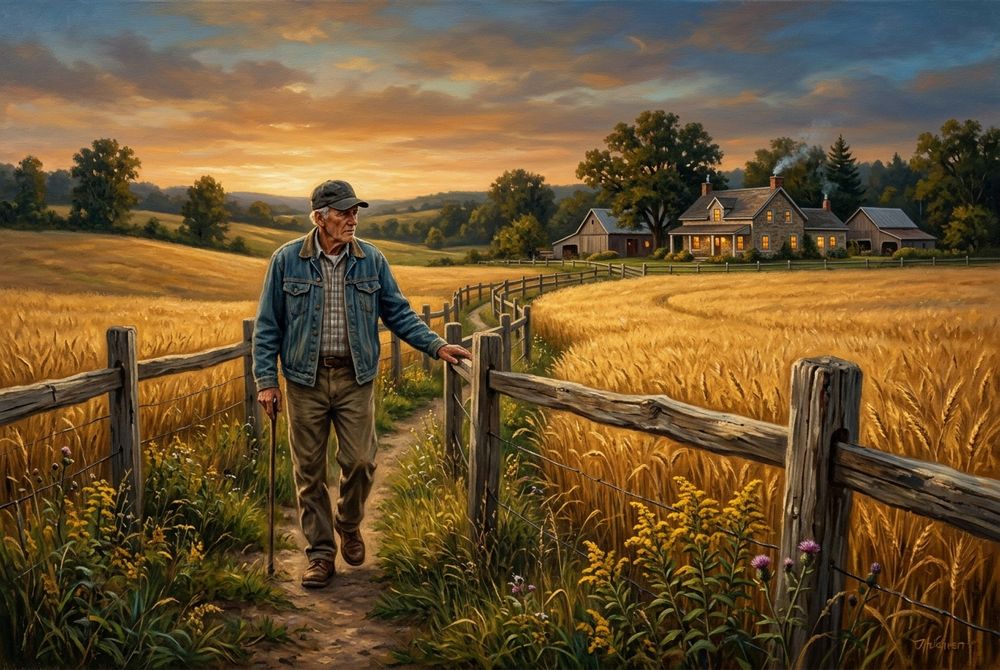
At evening the farmer walks his own fence line — unhurried, at home, master of the place. You can tell an owner’s walk from a visitor’s. Genesis 3:8 is an owner’s walk.
Where else God walks like this
Leviticus 26:12 is the covenant formula itself — I will be your God, you will be my people — and God’s walking-among is how it is said.
God walks in the camp; God walks in the tent. The same rare form, and again and again the same setting: God at home among his covenant people. The garden where God walks in the evening is that kind of place — which is exactly why hiding from “the presence” is the catastrophe it is.
The walking God stands over the sunrise sky’s eastern edge, beside the door he walks in by.
Open this scene’s sky →Halak, walk, is one of the commonest verbs in Hebrew; nothing rides on the plain word. The claim rests on this reflexive form in these Presence-texts — a small set, and we say so. And not every such walk is a Presence-text: in Job, the same form walks the vault of heaven (Job 22:14), and the accuser walks the earth (Job 1:7). What we can show is the company the form keeps in the books of Moses: camp, tent, covenant formula, garden. Weigh it.