Cherubim כְּרֻבִים
The guards take the post
The last verse of the Eden story posts guards: cherubim, at the east, with a sword of flame, “to keep the way of the tree of life.” Whatever cherubim are — and the Bible is in no hurry to explain them — watch what they do, and where else they stand.
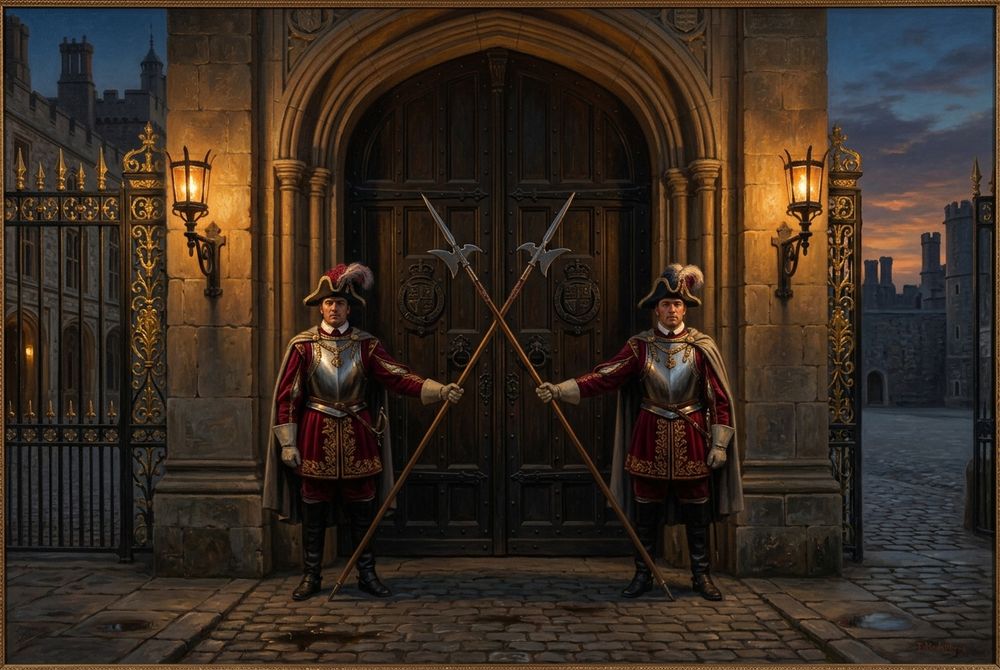
Crossed halberds at the palace gate. The guards tell you two things at once: the king is in residence — and you may not pass. That is Genesis 3:24 in one picture.
Where cherubim stand
Note the verb: the cherubim keep the way — shamar, the very word of Adam’s job in 2:15. The guarding Adam dropped is picked up at the door he left by.
In the tabernacle, cherubim are woven into the veil — the curtain that bars the way into the innermost Presence. Israel’s priests served daily before that curtain of woven cherubim — Eden’s last scene, stitched in thread.
God is enthroned between the cherubim — they mark the innermost room. And Ezekiel can even speak of the king of Tyre in cherub-language, in Eden’s own vocabulary — an anointed guardian who was set there, and fell. The Bible’s interest is the office: access to the Presence, kept.
The guards stand watch in the dusk sky, above the serpent they were posted against.
Open this scene’s sky →What cherubim are — angels, symbols, throne-carriers — the Bible leaves genuinely open, and so do we. (In Ezekiel’s visions they carry the moving throne itself — no barred way in sight.) Ezekiel 28’s king-as-cherub is a disputed passage and we use it for its Eden vocabulary, not as a system. What the texts agree on is the function: cherubim stand where God’s Presence meets a barred way. That function is this page’s whole claim.